
Role
Project Manager
UX Researcher
UI/UX Designer
Duration
4 months
Tools
Figma
Team
Francine Paguio
Ken Piquero
Hayat Galbete
Mohriz Abbassi
Oveview
Red thread innovation (RTI) pitch challenge
Our team took on the first problem space, protecting vulnerable users from online harm. The challenge was to design digital-first solutions that help vulnerable populations recognize, resist, and recover from threats like fraud, misinformation, and manipulative content.
PROBLEM SPACE
Immigrants/newcomers experiencing online job scams
With the economy struggling and unemployment rising, more people, especially newcomers, are growing desperate for jobs. That desperation has made the job search a vulnerable process, and that vulnerability is being exploited.
73%
of adults report experiencing some form of online scam or attack.
Job scam losses grew from $90 million in 2020 to over $501 million by 2024.
9 in 10 new Canadians surveyed said they are worried about financial fraud.
"HMW protect job seekers, especially newcomers/immigrants from exploitation during periods of economic vulnerability?
Solution
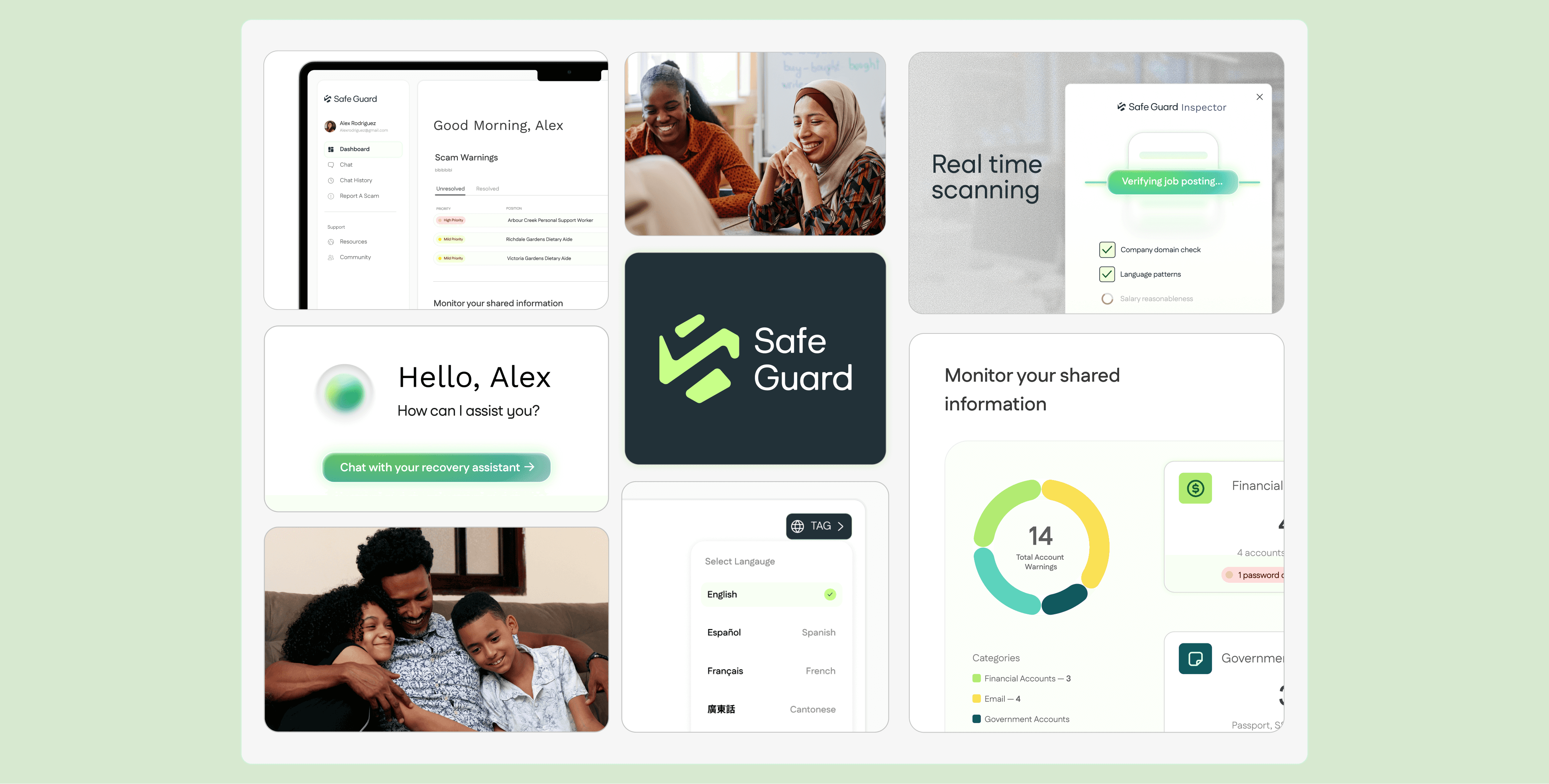
SafeGuard: A Real-Time Job Scam Detection and Recovery Platform
Scam Inspector
A browser extension to detect and report scams in real time as you browse through job applications.


Chatbot
Real-time guidance and support in multiple languages catered towards immigrants/newcomers.
Chatbot Summary
Every conversation is summarized and recovery steps for users to refer
back to.


Dashboard
A comprehensive view and real-time security alerts all in one place
Community Page
Users can share their job scam experiences and be informed of new threats.

DeciDING ON A PROBLEM SPACE
Why employment scams & immigrants/newcomers?
To create a deeper narrative for our problem space, each team member researched one problem space and the vulnerable demographic it affects. To choose our final topic, I built a decision matrix based on the key problem space requirements outlined in the brief, giving the most weight to whether the topic addressed an underserved market.

Decision Matrix & other potential topics.
Market gaps
What’s missing?
Our competitive analysis revealed three key gaps in the market. Most existing solutions are fragmented, failing to cover the full scam management lifecycle: prevention, mitigation, and recovery.

PeRsona
The pressured job seeker
We built our narrative around Alex, an immigrant job seeker applying to dozens of jobs while under financial pressure.
˝The hiring person just ghosted me, and I already paid for the job application. I'm so stressed, and I don't know what to do next.”

Ideation
Creating and prioritizing main features
We wanted to focus on features that would address both immediate scam detection and longer-term recovery needs. So we prioritized creating separate features that would act together as an ecosystem.

testing
Developing and conducting a testing plan
To test our prototype, I developed combined concept and usability testing session with another team. We first gave a short presentation introducing our problem space, our solution, and the main features of the prototype so participants could understand the purpose of the app.
Concept & Usability Testing Session
Group Discussion

Changes
The solution needed to be more catered to immigrants/newcomers


Lessons Learned
1
Problem-Solution Framing: I’ve worked on similar projects before, but having to present a pitch forced me to get intentional about the narrative, and it pushed me to see how the problem, audience, and solution all work together.
2
Project Management: Managing this project helped me develop a much better view of the "bigger picture". I realized my biggest role was maintaining the connective link across everything. From keeping our narrative unified and assigning tasks based on what teammates do best to filtering feedback from coaches, profs, and peers.

